
Operating at the pinnacle of success in New York City requires more than business acumen; it demands a specialized approach to personal security that matches the city’s intensity.
For corporate executives, high-profile investors, and prominent figures, Executive Protection in New York City is not a generic service—it is a hyper-specialized discipline designed to mitigate the unique, multi-layered risks inherent to the world’s most dynamic urban environment.
The standard security playbook fails in the five boroughs, where threats evolve as rapidly as the skyline.
This definitive guide outlines the critical framework for a successful Executive Protection program in NYC, one that enables leadership mobility and decision-making freedom amidst the complexities of dense crowds, relentless traffic, vertical living, and global visibility.
The NYC Executive Protection Mandate: Why Urban Density Demands a Different Playbook
The foundational principle of Executive Protection in New York City is the management of density and velocity. The city’s core challenges—extreme pedestrian and vehicle traffic, ubiquitous media and public scrutiny,
intricate building infrastructures, and the convergence of global interests—create a threat landscape unlike any other. A protective detail must orchestrate seamless movement through congested midtown streets, secure access in towering multi-use skyscrapers, and ensure privacy in world-famous restaurants and venues.
The objective of Executive Protection here is to create a secure, adaptive bubble that allows the principal to navigate their professional and personal life with confidence, turning potential vulnerabilities into controlled variables through meticulous planning and expert execution.

Mastering Vertical Security and High-Rise Logistics
A significant portion of an executive’s risk exposure in NYC occurs not on the street, but within the vertical ecosystems of residential and corporate towers.
Executive Protection in New York City requires mastery of high-rise security protocols. This involves detailed advance work to map all building ingress and egress points—including service entrances, loading docks, and garage access.
The protective team must establish secure protocols for elevator control, stairwell management, and lobby transit. In a crisis, traditional ground-level evacuation plans are often irrelevant; therefore,
Executive Protection strategies must include designated safe havens within buildings, coordinated lock-down procedures, and established communication lines with building security that go beyond front-desk relationships.
The ability to control the vertical dimension is non-negotiable for comprehensive safety.
Navigating Gridlock: Advanced Urban Transportation and Route Analysis
Mobility is the ultimate test of an Executive Protection program in New York City.
The protective detail’s transportation strategy must account for perpetual gridlock, frequent road closures, subway-dependent crowds, and the impossibility of predictable routes. This demands:
· Multi-Modal Contingency Planning: Proficiency in transitioning between armored vehicles, discreet street vehicles, and secure public transport options when gridlock is absolute.
· Real-Time, Predictive Route Analysis: Utilizing advanced software that integrates live traffic data, NYPD advisory reports, event calendars, and historical congestion patterns to plot multiple primary and alternate routes for every movement.
· Defensive Urban Driving Expertise: Drivers trained not just in evasion on open roads, but in navigating tight urban canyons, managing box junctions, and maintaining security postures in static traffic.
· Secure Curb-Side Protocols: Detailed procedures for safe principal embarkation and disembarkation on crowded streets, a critical and vulnerable moment in the urban protection cycle.
The Five Pillars of a New York-Centric Executive Protection Program
An effective program for Executive Protection in New York City is built on five interconnected, non-negotiable pillars.
1. Hyper-Local Intelligence and Advance Work
Intelligence in NYC must be block-by-block. Advance teams conduct granular reconnaissance that notes construction schedules, local event impacts, street vendor layouts, and the operational patterns of nearby businesses.
This intelligence extends to cyber-physical threats, monitoring social media for localized chatter or protest planning that could affect a specific neighborhood. For Executive Protection to be proactive,
the team must possess a deeper understanding of the immediate environment than any potential threat.
2. Discreet, Low-Visibility Protective Operations
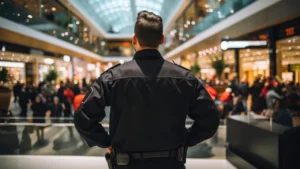
In a media-saturated environment where attracting attention can itself become a security liability, the protective detail must master the art of discretion. Executive Protection in New York City often employs a low-visibility, close-proximity model.
Agents are trained to blend into the urban fabric—appearing as associates, assistants, or fellow professionals—while maintaining constant situational awareness and readiness.
This approach minimizes the “celebrity effect,” reduces drawing a crowd, and allows the principal to engage in business and social activities without the disruption of an overt security presence.
3. Integrated Cyber-Physical Security for the Digital Metropolis
An executive’s digital footprint is a direct gateway to their physical security in the world’s most connected city. Executive Protection protocols must include rigorous digital sweeps for tracking devices,
encrypted communication systems resilient to urban signal congestion, and cybersecurity measures for public Wi-Fi networks prevalent in NYC hotels and cafes.
The team must also manage the principal’s visibility on location-based social media apps and address risks from “doxing” or the real-time tracking of movements by adversaries using digital means.
4. Seamless Venue and Event Security Management
The NYC executive’s life is a circuit of high-stakes meetings, galas, and public appearances. Each venue presents a unique security puzzle.
The Executive Protection team must conduct thorough pre-event advances, coordinating with private venue security and NYPD’s Intelligence Bureau when necessary, to establish secure entry/egress routes, identify holding areas, and implement access control.
The ability to rapidly establish a secure perimeter in a crowded, multi-access environment like a hotel ballroom or conference center is a specialized skill critical to the NYC context.
5. Crisis Response and Medical Preparedness in a Congested City
When seconds count, NYC’s density can slow emergency response. Therefore, a premier Executive Protection program includes embedded medical capability.
Agents are typically certified in Tactical Emergency Casualty Care (TECC), trained to provide life-saving intervention during a medical emergency or violent incident until NYC EMS can navigate to the location.
The crisis plan must account for extended response times during peak hours and include pre-identified trauma centers and evacuation routes from key locations.
Choosing the Right Executive Protection Partner for New York City
Selecting a firm for Executive Protection in New York City requires vetting for specific urban competencies.
The right partner will demonstrate proven experience navigating the five boroughs, possess established liaison relationships with relevant city agencies, and employ agents who are not just security experts but intuitive New Yorkers themselves.
They should present a philosophy centered on enabling the principal’s life, not restricting it, through flawless, adaptive logistics.
Conclusion: Enabling Leadership in the Urban Arena
Ultimately, professional Executive Protection in New York City is the ultimate enabler for high-stakes leadership. It is the sophisticated, invisible framework that allows visionaries to shape industries, close transformative deals, and engage with the world from the center of global commerce—all with unwavering confidence.
By adopting a program built on hyper-local intelligence, discreet operations, and mastery of the urban environment, executives and their organizations transform security from a perceived constraint into their most powerful strategic asset. In the relentless pace of New York City, superior protection is what allows ambition to thrive securely.